ABC Friends – the first 50 years
  • HISTORY
  • ABOUT ABC FRIENDS
  • MAKE CONTACT
  • ACKNOWLEDGEMENTS
  • HISTORY
  • ABOUT ABC FRIENDS
  • MAKE CONTACT
  • ACKNOWLEDGEMENTS

1996-2005

Save the ABC

Confrontation was the dominant characteristic of the Friends of the ABC’s third decade. The Coalition government under John Howard took office in March 1996. In July, it announced cuts to the ABC’s funding and initiated a review of its operations. It appointed known supporters of the Liberal party to the ABC board and accused the ABC of bias, which investigation didn’t substantiate. Meantime, ABC staff railed against the actions of Jonathan Shier, ABC Managing Director from March 2000 to December 2001.

All of this contributed to a revival of interest in the Friends of the ABC! Branches surged in every state, with more regional groups outside capital cities. Founder Walter Bass retired from the NSW Friends in 1996, but Victoria’s new president, Dr June Factor, proved an energetic leader. The Victorian Friends received donations from across Australia, enabling it to rent an office and employ a part-time campaign organiser.  

Protests had variety ranging from a 24-hour vigil outside the ABC offices in Melbourne to placards in Brisbane asking drivers to ‘toot for the ABC’. In 2001, a convoy of buses and cars formed a ‘Cavalcade to Canberra’ calling at eight Victorian regional centres before joining a rally at Parliament House.

Later that year, nearly 15,000 ABC supporters gathered at the Sydney Opera House for an ‘extraordinary shareholders meeting’. The 10 per cent discount at ABC shops for Friends of the ABC ceased in 2005, but from now, there was no stopping the movement’s future.    

Ballarat Friends of the ABC at the 2001 Ballarat Begonia Festival Parade. ABC Friends Archives.
  • 1996 March

    The Liberal-National coalition government under John Howard is elected on 2 March. Senator Richard Alston, Minister for Communications until October 2003, alleges bias in ABC news reports.

    Senator Richard Alston, Minister for Communications and cartoon depicting Alston by Bill Leak 1997, from a calendar produced by Friends of the ABC SA, reproduced with permission of Johannes Leak.
    Read more
  • 1996 May

    Walter Bass resigns as Friends of the ABC President in NSW, after 20 years active involvement. June Factor becomes president of the Victorian Friends just as its membership soars.

    June Factor, 1997. ABC Friends Archives.
    Read more
  • 1996 July

    The government cuts ABC funding, contrary to its pre-election statements. Friends of the ABC around Australia mobilise in response.

    ‘Toot’ for the ABC. Photo by John Ellis, ABC Friends Archives.
    Watch video
  • 1996 July and August

    On 27 July, the Mansfield Review into the ABC calls for submissions by 31 August. Friends of the ABC rush to prepare its case, encouraging individuals to write letters saying what the ABC means to them. Over 10,600 submissions are received by the deadline.

    Announcement calling for submissions to the Mansfield Review, The Age, 27 July 1996.
  • 1996 August

    Rallies are held at the Domain in Sydney and at the Melbourne Town Hall to oppose advertising on the ABC and to support better government funding.

    Rally at Melbourne Town Hall with MC Rod Quantock, 12 August 1996. ABC Friends Archives.
    Read more
  • 1996 September

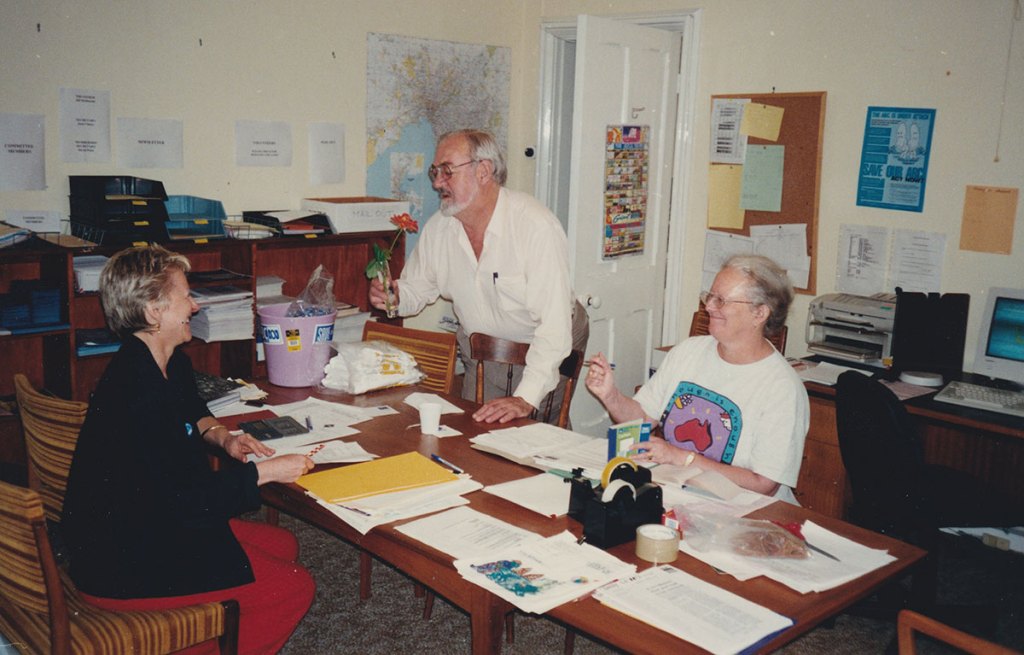
    Victorian Friends of the ABC sets up an office in South Melbourne, employing Glenys Stradijot as part time campaign organiser.

    Office of ABC Friends in Chapel Street with campaign organiser, Glenys Stradijot. ABC Friends Archives.
    Read more
  • 1997 January

    The report of the Mansfield Review is made public on 24 January concluding that there will be no advertising on the ABC. But it does propose axing Radio Australia, leading to immediate protests from Friends of the ABC. With support from politicians on both sides, the service is cut back rather than abolished. The ABC’s international broadcasting has continued to be a major concern of ABC Friends.

    Protest at ABC Southbank in Melbourne, against decision to axe Radio National 1997. ABC Friends Archives.
  • 1997 March

    Friends of the ABC Victoria are part of the ABC Open Day at the Sidney Myer Music Bowl.

    Friends of the ABC information stand, during ABC Open Day. ABC Friends Archives.
  • 1997 December

    Friends of the ABC SA produce a calendar with cartoons by Bill Leak, daily cartoonist for The Australian.

    Cartoon from a calendar of cartoons by Bill Leak, produced by ABC SA, reproduced with permission of Johannes Leak.
  • 1998 February

    Minister for Communications, Senator Alston, appoints Michael Kroger, former president of the Victorian Liberal Party, to the ABC Board.

    Cartoon by Ron Tandberg. Reproduced courtesy of the Tandberg family.
    Read more
  • 1998 September

    Friends of the ABC hold a 24-hour vigil outside the ABC studios in Melbourne’s Southbank during the 1998 election to catch the attention of politicians entering the building.

    Site of 24-hour vigil, 28 September 1998. ABC Friends Archives.
  • 1999 December

    President of Friends of the ABC Queensland, Elisabeth McClement, is praised in the Queensland Legislative Assembly by Cairns representative, Desley Boyle, for speaking out for the ABC.

    Elisabeth McClement, supplied.
    Read more
  • 2000 December

    Friends of the ABC opposes the ABC’s proposed credit card.

    The Sydney Morning Herald, 7 December 2000.
  • 2001 February

    Rally outside Parliament House in Canberra to protest further funding cuts and political appointments to the ABC Board. Friends of the ABC in Victoria travel in a bus ‘cavalcade’ to Canberra to join the rally.

    Protesters part of the cavalcade to Canberra, 2001. ABC Friends Archives.
  • 2001 April

    Over 15,000 ABC supporters sit on the steps of the Sydney Opera House for an ‘extraordinary shareholders meeting’.

    Sydney Opera House rally, 2001. Photograph by Chris. Cartledge, ABC Friends Archives.
    Watch video
  • 2001 November

    ABC Managing Director Jonathan Shier resigns, after months of criticism from ABC staff and Friends of the ABC. Shier began his tenure by sacking key executives, axing established programmes, and running up huge redundancy payments. He fell out spectacularly with the ABC’s head of news and was made to resign.

    Protest by the Friends of the ABC against Jonathan Shier. Photograph by Reginald Alder, National Library of Australia, PIC Box PS 11773 #PIC/4025/2.
  • 2005 September

    ABC announces that the 10 per cent discount for Friends members at the ABC shops will end on 31 December 2005.

    Update, September 2005. ABC Friends Archives.
  • Reflection: ABC Friends people

    ABC Friends objectives are in some ways uncontroversial – who can argue with ‘good health’ for a public institution…

    Read more
Back to home
View next decade

Menu

  • HISTORY
  • ABOUT ABC FRIENDS
  • MAKE CONTACT
  • ACKNOWLEDGEMENTS

ABC Friends – the first 50 years

What began with five people in April 1976 has grown to over 80,000 in 2026. This is the story of ABC Friends.

© ABC Friends 2026

Alston, bias and cartoonists in the 1990s

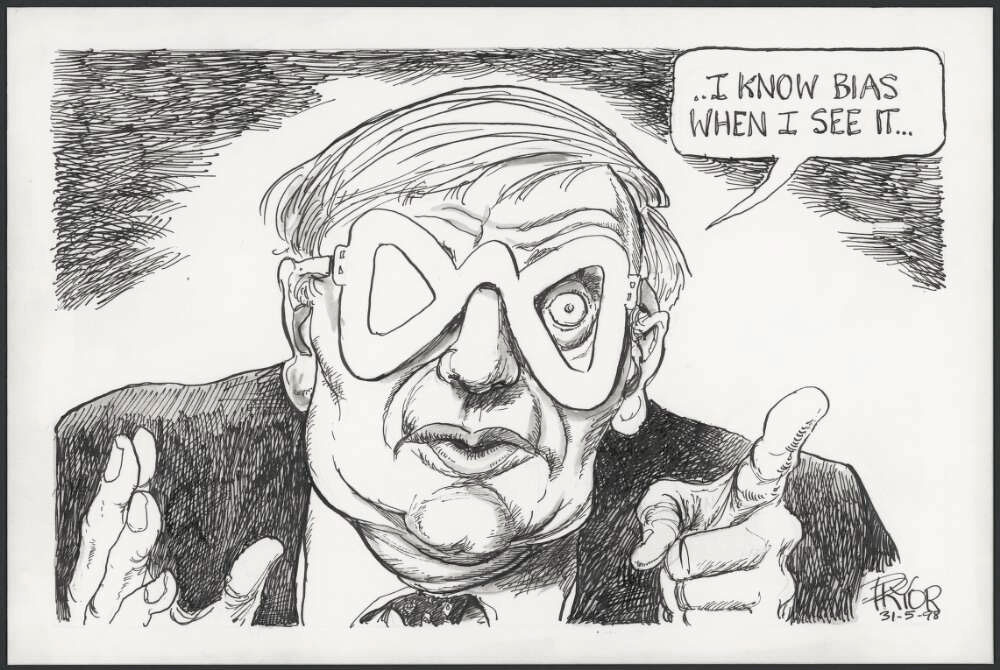
Senator Richard Alston’s allegations of bias on the ABC were insistent – and in the main, not substantiated by independent investigations. But Alston’s persistence was great fodder to cartoonists who presented many interpretations of the situation. Many generously made their work available to Friends of the ABC’s newsletters and flyers.

Cartoon by Ron Tandberg. Reproduced courtesy of the Tandberg family.
Cartoon by Lindsay Foyle © National Museum of Australia.
‘I know bias when I see it – Alston on the ABC, 1998’, Geoff Pryor. National Library of Australia, PIC Drawer 10641 #PIC/10753/358.
Cartoon by Alan Moir. Reproduced courtesy of the Moir family.
Cartoon by Ron Tandberg. Reproduced courtesy of the Tandberg family.

June Factor takes the helm

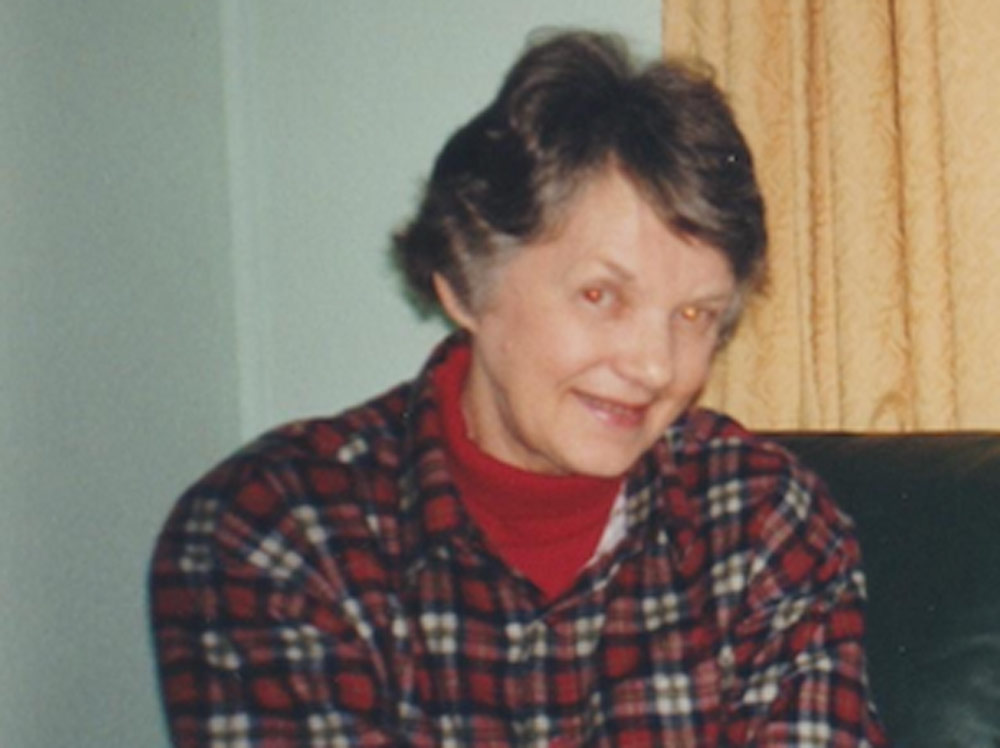
Dr June Factor was an academic researcher with a special interest in children’s folklore when she became president of the Friends of the ABC in 1996. She had previously been a teacher, had broadcast frequently on Melbourne’s community radio station 3CR, and was friends with Senator Janet Powell, the Victorian Friends’ president from 1992. June readily agreed when Powell asked her to take charge of the group in early 1996.

Dr June Factor. ABC Friends Archives.

The actions of the Howard government in July 1996 caused a dramatic change of pace. June’s ability as a public speaker and persuasive writer, coupled with an upbringing in political activism, fuelled the campaign ‘Save Our ABC’.

Media coverage of the government’s cuts to the ABC was hard to miss.

June’s letters to The Age in Melbourne in 1996 led to people making contact with her (not unlike events in 1976 when Aunty’s Nieces and Nephews formed).  Shirley Parkes was one of those in 1996 who decided the situation needed an active response.

The group set about organising rallies, picnics, and public protests. They produced a book, ‘Save Our ABC’, with contributions from Peter Craven, Robert Manne, Natasha Stott Despoja, Geraldine Doogue and Frank Brennan.

Cover of ‘Save our ABC’, produced by Friends of the ABC, 1996.

The introduction was written by June Factor and Sir Rupert Hamer, who was president of Friends of the ABC Victoria 1988–1992.  They wrote that the intention of the book was ‘to persuade the current Federal government – and subsequent governments – that the ABC is a national treasure which they have the responsibility, on our behalf, to cherish and support.’

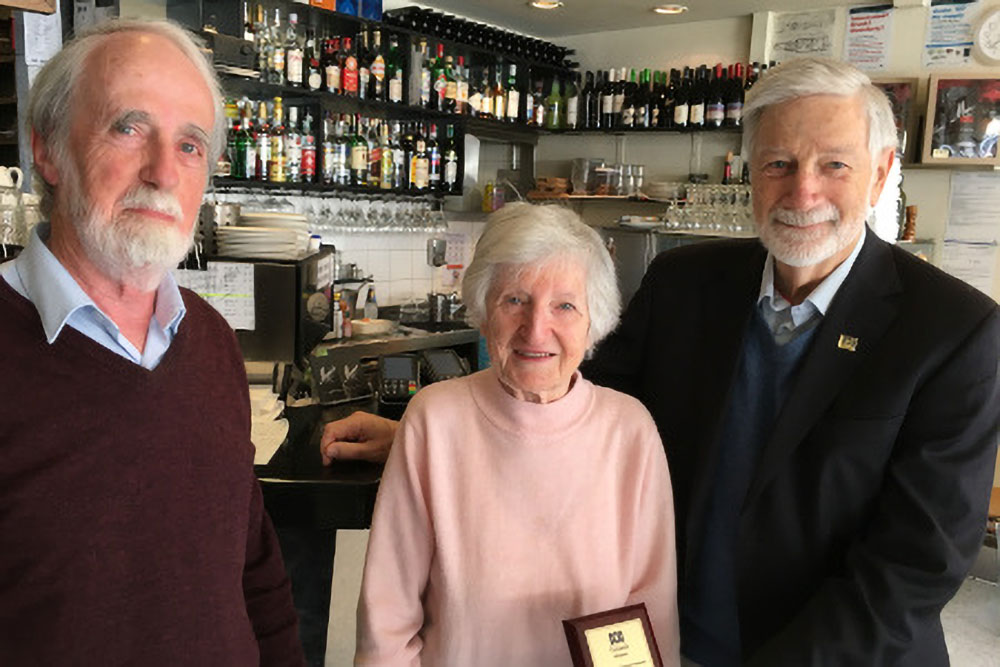
June Factor was made a life member of ABC Friends Victoria in 2022, two years before she passed away in 2024.

Left to right: Peter Monie, June Factor and Michael Henry in 2022, ABC Friends Archives.

ABC Rally, Brisbane 1996

ABC Brisbane, 19 July 1996, Australian Broadcasting Corporation Library Sales.

August 1996: rallying season

Rallies have traditionally given the public a chance to declare their support for a cause: a slew of rallies took place in August 1996 to let ABC supporters do precisely that.

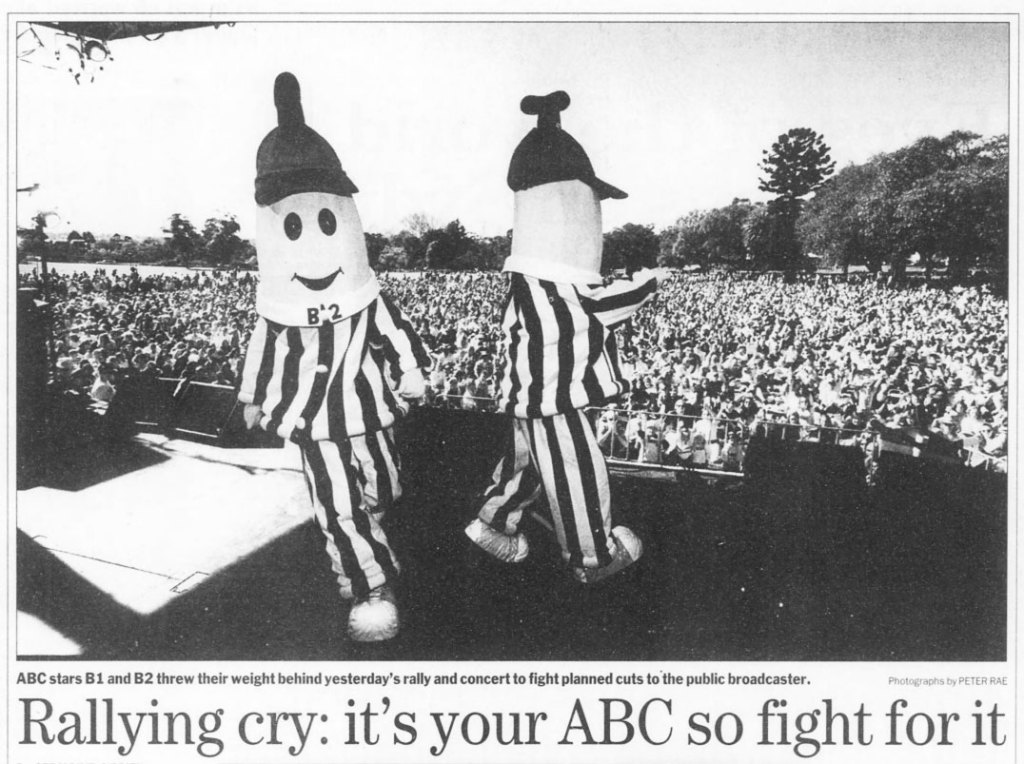
The first, at The Domain in Sydney on 4 August, was organised by ABC staff – journalists Maxine McHugh and Quentin Dempster shared the stage with Jemima from Play School and the Bananas in Pyjamas, before Christine Anu, Roy and H.G. and the Sydney Symphony Orchestra among others entertained an estimated crowd of 60,000.

A stall run by NSW Friends of the ABC enabled 4,000 letters to be written by members of the public to politicians. Among the many speakers was magistrate Pat O’Shane, who took issue with Bob Mansfield saying he did not want the inquiry he was then chairing into the ABC to become ‘emotional’. Pat O’Shane’s response was to declare ‘we are entitled to be emotional about the things we care about and if he can’t stand our emotional heat, he should get out of the kitchen cabinet.’

ABC rally at The Domain, Sydney, The Sydney Morning Herald, 5 August 1996, p. 3.

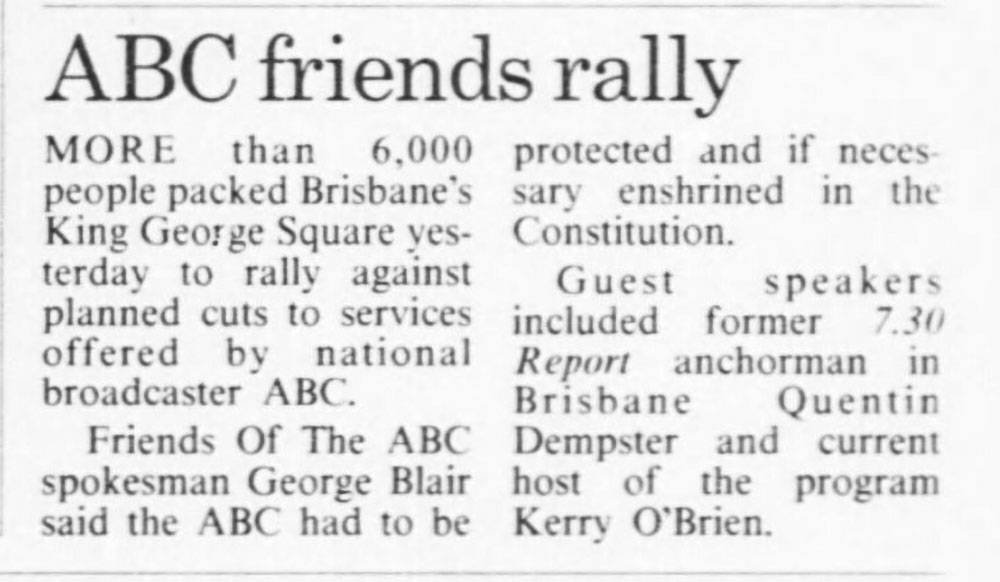
Rallies continued across Australia. Friends of the ABC in Queensland spokesman George Blair spoke at an event in Brisbane on 10 August calling for ‘protection’ of the ABC.

The Herald Sun, 11 August 1996, p. 14.

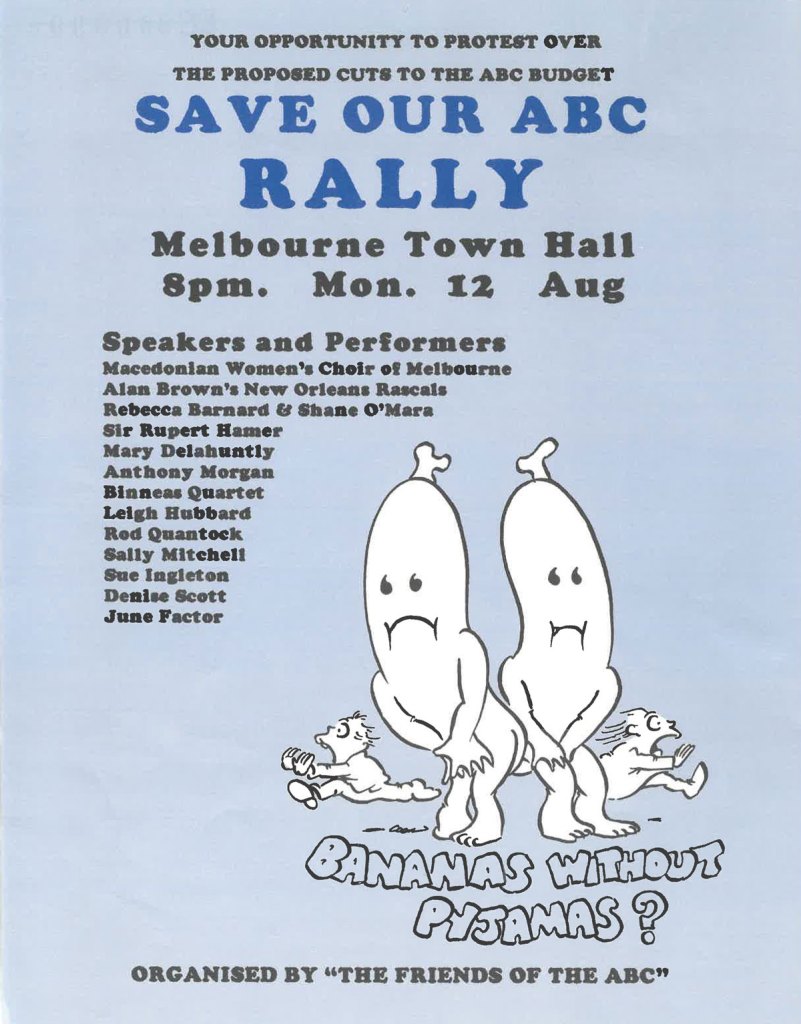
While in Melbourne, the City Council provided the Melbourne Town Hall for a rally and concert on 12 August organised by Friends of the ABC.

Flyer promoting the rally. ABC Friends Archives.

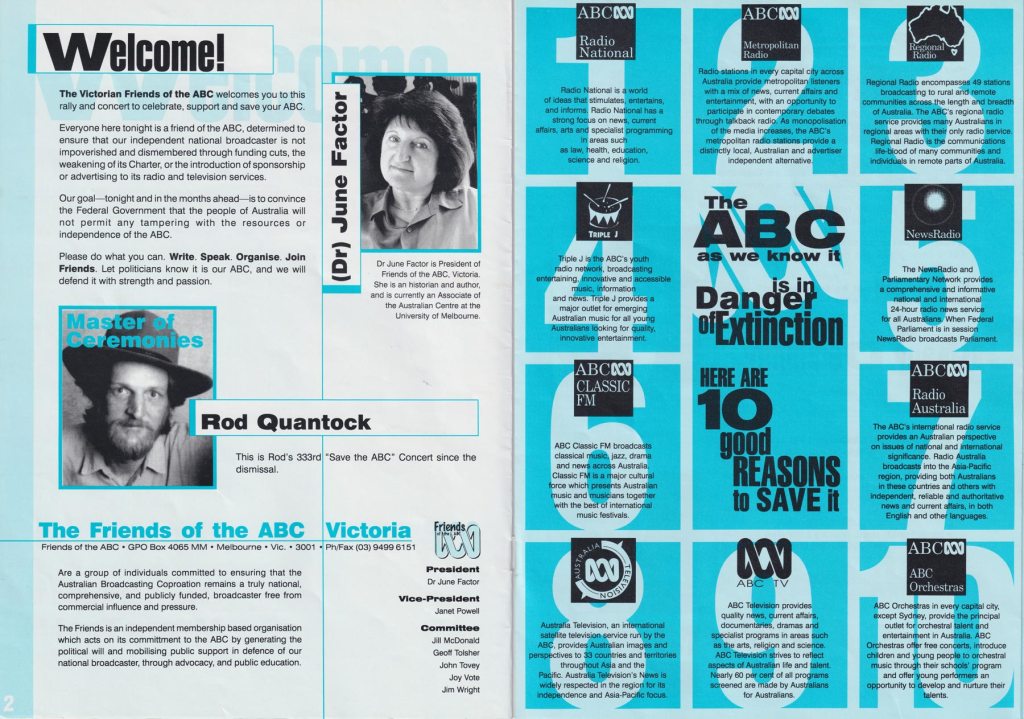
June Factor’s committee produced a stylish program for the occasion. It was almost a manifesto, with statements affirming the value of the ABC from groups such as the Council on the Ageing Victoria and the Victorian Council for Civil Liberties, as well as listing ’10 good reasons’ to save the ABC.

Save Our ABC rally program, 12 August 1996. ABC Friends Archives.

Glenys Stradijot, then a Friends of the ABC Victoria volunteer and later employed as campaign director, remembers the part the ABC itself played in the Melbourne rally.

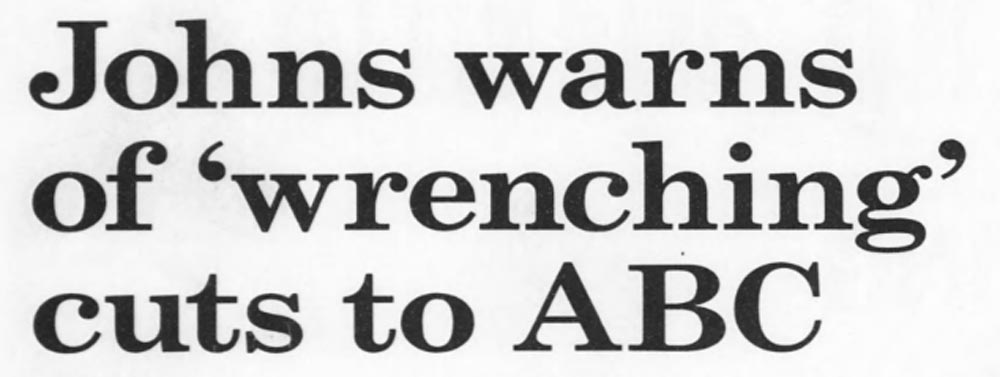
In September, ABC Managing Director Brian Johns addressed a Friends of the ABC rally in Adelaide, describing the proposed cuts as ‘not a pruning exercise, but wrenching’ in their impact. He made a point of referring to ‘the public outcry’ shown by the rallies.

The Sydney Morning Herald, 9 September 1996, p. 2.

The Melbourne office

The Victorian branch of Friends of the ABC established an office in 1996. It was partly the consequence of a new volunteer, Glenys Stradijot, who was later employed on a part-time basis as campaign organiser. She brought considerable understanding of campaign work, gained from her experience as an electorate officer.

Protest outside ABC Melbourne studios during an ABC board meeting, 2001. ABC Friends Archives.

Glenys was brought into the Friends by June Factor. She set up a newsletter, Vic News, and wrote media releases for campaign actions. She could see the Friends campaign would not be over quickly – an office would offer many advantages.

At the ABC Friends Chapel Street office, Glenys, Mary and Jack. ABC Friends Archives.

The Friends of the ABC office was relocated to South Melbourne later, and then to the centre of Melbourne. Many people visited throughout the week – to help, to plan (and at times, to argue). Rosie Spear was a regular, as a committee member and committed activist.

Friends of the ABC first headquarters, All Saints Vicarage, Chapel Street 1997. ABC Friends Archives.

Campaign work varied, but for Rosie Spear, getting the public involved was crucial.

Rosie Spear and Shirley Parkes, letter writing stall in Bourke Street, Melbourne, 2001. ABC Friends Archives.

Rosie Spear is still on the Victorian committee of Friends of the ABC, coordinating volunteers. Glenys Stradijot worked for Friends of the ABC in Victoria until 2015, earning the gratitude and respect of many in the organisation.

Political appointments to the ABC Board

The ABC Board is responsible for making policy decisions about the ABC, determining the priorities of its operations. The decisions about who sits on the board are crucial – and at many times, they have been contentious. This was particularly so during the Howard government years, and the issue of board appointments persisted as a matter of concern to ABC Friends.

The government of the day appoints the chair of the ABC and its board (other than the staff-elected director when that position exists). From the start, appointments were often politically driven – historian Ken Inglis has described them as ‘acts of political patronage’ – by both Labor and Coalition governments.

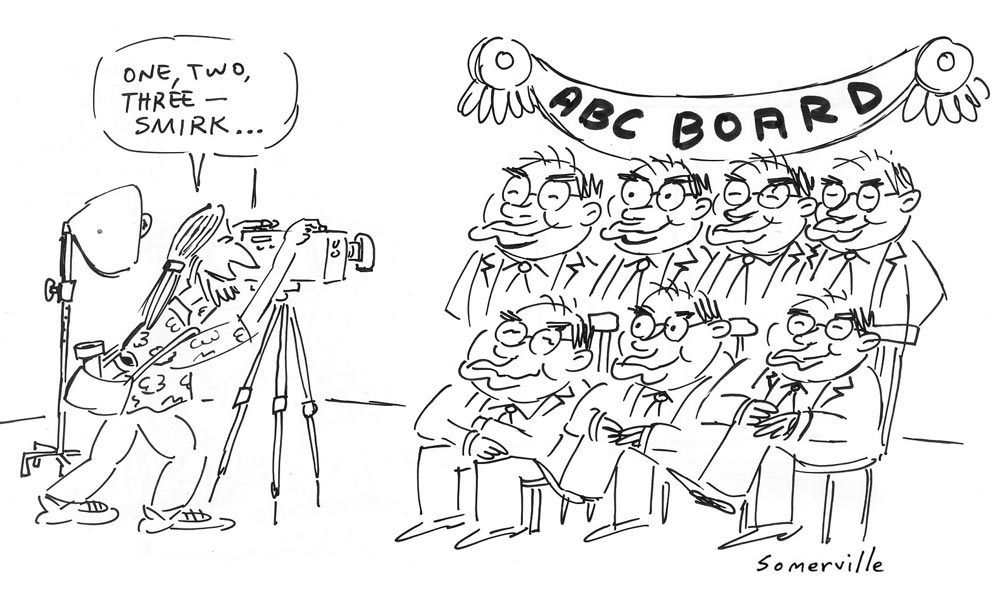
In 1998, Senator Richard Alston announced that Michael Kroger would join the ABC Board. Kroger had been president of the Victorian Liberal Party from 1987 until 1992, and was still active in its affairs. His presence on the ABC Board was perceived by many as a political appointment too far.

Cartoon by Phil Somerville, Update June 2002, p. 13. ABC Friends Archives.

In 2001, a Senate inquiry into ABC Board appointments was set up. Friends of the ABC called on supporters to write in favour of a system based on merit and commitment to public broadcasting.

Campaign material urging ABC Friends to write letters about the process of board appointments. ABC Friends Archives. Read more about the submissions received here.

In 2005, anthropologist Ron Brunton of the Institute of Public Affairs was appointed to the ABC Board, followed by columnist at The Australian Janet Albrechtsen, and editor of right-wing Quadrant, historian Keith Windschuttle in 2006.  

Cartoon courtesy of local FABC Illawarra member Alan MacKay.

In 2012, an amendment to the ABC Act called for an arm’s length merit-based shortlisting selection process. However, an appointment can still be made outside the selection process by the Prime Minister or Communications Minister announcing it in Parliament.

Friends of the ABC Queensland

Friends of the ABC in Queensland had its first meeting on 29 November 1976, attended by 500 people. It was an active branch for several years, but appears to have gone into recess during the 1980s – until a relaunch in 1989.

Current president of ABC Friends Queensland, Vikki Uhlmann, is undertaking a search of its archives, many of which are kept by the University of Queensland’s Fryer Library. She has discovered an unusually close relationship between the ABC and Friends of the ABC Queensland when the branch resumed, as well as one distinctive individual member.

Elisabeth McClement. ABC Friends Archives.

Elisabeth McClement’s achievements were recognised at the time. Her name occurs in a speech given on 7 December 1999 by Queensland politician Desley Boyle urging fellow members of the Queensland Legislative Assembly to join the Friends of the ABC:

‘I encourage all members, especially those from rural and regional areas of Queensland, to join the Friends of the ABC, so ably led by Elisabeth McClement in Queensland, to speak out for the importance and for the standards of our national ABC broadcasting.’

Vikki Uhlmann has been trying to discover more about Elisabeth McClement from the available records.

Elisabeth McClement’s diary. ABC Friends Archives.

Vikki Uhlmann is continuing to explore the development of ABC Friends in Queensland, its connection to the politics of the state and the commitment of the group’s members.

Vikki Uhlmann, ABC Friends Queensland, supplied.

2001 Rally

The event was covered by ABC News in this television report.

ABC Sydney 7pm News, 29 January 2001, Australian Broadcasting Corporation Library Sales.

Reflection: ABC Friends people

ABC Friends objectives are in some ways uncontroversial – who can argue with ‘good health’ for a public institution? But the ABC’s very existence has been threatened more than once with the result that people who have joined ABC Friends are often highly motivated and passionate about its survival.

There are different factors influencing involvement with the Friends, stemming from affection for the ABC as an audience member, to more political commitment to public service broadcasting. Some active members become fascinated by the intellectual challenge of topical media issues; others enjoy the social contact that participation brings.

There have been occasional surveys of members. Friends of the ABC NSW conducted a survey in 1979 as part of its submission to the Dix Inquiry. It found members were predominantly female, middle aged and middle class. Leonie Miller, a member of the ABC Friends Victoria committee in the 2010s has seen a similar class demographic during her time:

It tends to be people who are older, retired, a bit better off, a bit better educated, who listened to the ABC or watched it, but particularly I think people who listen to things like Radio National and possibly Classic FM. They tend to be the people who join ABC friends.

Responses to a survey of member in 2023 by ABC Friends South Australia suggested women over 60 were the largest group. While the 1979 survey had inquired about members’ ABC program interests, 2023 Friends were asked more about the kind of collective activity they would prefer to undertake. Their responses ranked political campaigning more highly than social get togethers. ABC Friends members currently debate the framing of ‘consumer’ or ‘citizen’ as the primary basis for advocacy of the ABC.

Heather D’Cruz, a Victorian member since the 1990s, has noted the limited ethnic participation in ABC Friends:

Most of the membership of the friends of the ABC are educated people in New South Wales and Victoria, mostly white people, Anglo people, who have a very strong nostalgic connection to the ABC…I’m from India, I’m Eurasian, so I do have a brown skin and dark hair and I look obviously not a white person…I mainly support the Friends of the ABC because I think the ABC is so essential for the news and independence for our democracy.

Both ABC Friends NSW and Victoria current strategy documents include an objective to attract a more diverse membership to the organisation.

Support for ABC Friends covers a spectrum of activity, from committed activists ‘on the job’ for hours each week, to those who may turn out at occasional events and rallies. ABC Friends NSW membership secretary for many years Angela Williamson would make a point of regularly contacting local branches:

I took a personal interest in all our members. I couldn’t reach all of them, but as many as I could, I did. Every day I’d be doing something – I would put in probably, 10 to 20 hours a week on ABC Friends routinely.  

ABC Friends NSW and Victoria have cultivated local groups or branches. These have the advantage of building on established affiliations to a locality and its political representatives; the disadvantage is that groups can become small. Their activities include meeting the public at stalls, gathering to write letters to politicians, organising events with guest speakers – and all of these during federal election campaigns. While groups occasionally fold, others are established and the total number has remained broadly similar over the last thirty years – something to celebrate!

Andrews, Kylie Trailblazing Women of Australian Public Broadcasting, 1945–1975, Anthem Press, London, 2022.

Bandler, Hans ‘Mass Communication for the Younger Generation’, Quockerwodgers: Mass Media Control, Australian Mass Communications Council, Sydney, 1973, pp. 35–37.

Berg, Chris and Sinclair Davidson, Against Public Broadcasting, Connor Court, 2018.

Bongiorno, Frank Dreamers and Schemers: A Political History of Australia, La Trobe University Press, Melbourne, 2022.

Dempster, Quentin, Death Struggle, Allen & Unwin, 2000.

Inglis, K.S., This is the ABC: The Australian Broadcasting Commission, 1932–1983, 2nd ed, Black Inc., Melbourne, 2006.

Inglis, K.S., Whose ABC? The Australian Broadcasting Commission, 1983–2006, Black Inc., Melbourne, 2006.

Ganter, Sarah Anne,Christian Herzog and Viola Candice Milton, ‘Public Service Broadcasting-Friends groups as a microcosm of public interest media advocacy’, Humanities & Social Science Communications, vol. 7, no. 68, 2020.

Griffen-Foley, Bridget ‘Chronically Concerned’: The Australian Broadcasting Commission and its Advisory Committees’, Media History, Vol. 31, No. 3, 2025, pp. 279–310.

Harding, Richard Outside Interference: The Politics of Australian Broadcasting, Sun Books, Melbourne, 1979.

Holmes, Jonathan, On Aunty, Hachette Australia, 2019.

Iveson, Kurt, ‘Building a City For “The People”: The Politics of Alliance-Building in the Sydney Green Ban Movement’, Antipode, vol. 46, no. 4, 2014.

Molomby, Tom, Is There a Moderate on the Roof?: ABC Years, W. Heinemann Australia, Port Melbourne, 1991.

Lawrence, Mark, ‘How ABC acquired an abundance of nieces and nephews’, The Age, Green Guide,23 November 1978, p. 2.

Napoli, Philip M., ‘Public Interest Media Advocacy and Activism as a Social Movement’, Annals of the International Communication Association, vol. 33, no. 1, 2009, pp. 385–429.

Newspapers: The Age, The Sydney Morning Herald, Canberra Times

National Archives of Australia

Paul, Meg, ‘Public Pressure Groups in Broadcasting’, in Brendan O’Dwyer (ed.), Broadcasting in Australia: Today’s Issues and the Future. Proceedings of the National Conference held in July 1980, Centre for Continuing Education, Australian National University, Canberra, 1980, pp. 137–43.

Ricketson, Matthew & Patrick Mullins, Who needs the ABC, Scribe, 2022.

Stephens, Tony, ‘Bandler, Ida Lessing Faith (1918–2015)’, Obituaries Australia, National Centre of Biography, Australian National University, https://oa.anu.edu.au/obituary/bandler-ida-lessing-faith-15982/text30791, accessed 16 January 2026.

Stephens, Tony ‘Bandler, Hans (1914–2009)’, Obituaries Australia, National Centre of Biography, Australian National University, https://oa.anu.edu.au/obituary/bandler-hans-19329/text30793, accessed 16 January 2026.

Loading Comments...