ABC Friends – the first 50 years
  • HISTORY
  • ABOUT ABC FRIENDS
  • MAKE CONTACT
  • ACKNOWLEDGEMENTS
  • HISTORY
  • ABOUT ABC FRIENDS
  • MAKE CONTACT
  • ACKNOWLEDGEMENTS

1976-1985

Hands off the ABC

‘Hands off the ABC’ was the name of the first rally held by Aunty’s Nieces and Nephews, the inaugural ABC Friends group in Victoria. On 23 November 1976, almost 2,000 supporters packed into the Melbourne Town Hall to hear Gough Whitlam denounce funding cuts imposed on the Australian Broadcasting Commission by the Fraser government.

Aunty’s Nieces and Nephews had formed in April that year; in the same month, a group was established in Sydney called ‘Friends of the ABC’. Neither group was going to sit idly by as the ABC’s funding was eroded, and the government applied pressure to its management.

These founding members had campaigning experience and leapt into action. They called public meetings and galvanised supporters. Within a year, Friends of the ABC groups formed elsewhere in Australia with a petition in Tasmania, leafletting in Canberra and a rally in Perth. In the lead up to the 1977 Federal election, the Queensland Friends urged supporters to quiz candidates about their views on the ABC.

The new groups participated in a government review of the ABC which – to their dismay – recommended that the ABC take a form of sponsorship. They continued to write to newspapers and canvass politicians – and could celebrate when the government decided in 1982 to reject ‘corporate underwriting’ at the ABC.

In 1983, Parliament passed legislation creating the Australian Broadcasting Corporation and the charter that underpins its present operation, including the requirement for news reporting that is accurate and impartial by the standards of objective journalism.

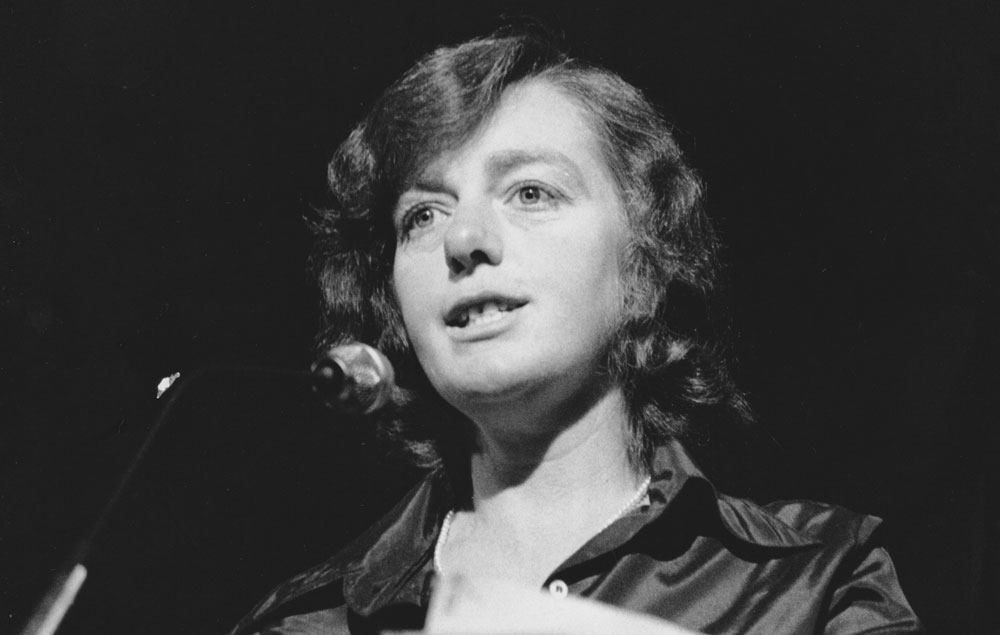
Image: Phillip Adams speaking at the first rally by Aunty’s Nieces and Nephews on 23 November 1976 at the Melbourne Town Hall. Photograph by John Ellis, University of Melbourne Archives.
  • 1976 February

    The newly elected Fraser government announces cuts to the ABC’s funding; newspapers react with dramatic headlines, ‘Axe hovers menacingly over gore-stained Aunty’, ‘Stirrings in the ABC’, ‘Top ABC man supports 7-day strike’.

    Malcolm Fraser and the Liberal government win the 1975 election. ABC Alumni.
  • 1976 April

    Newspapers publish letters and notices calling on the public to support the ABC.  

    Friends of the ABC in Sydney forms after an advertisement in The Sydney Morning Herald authorised by Faith Bandler.

    Bandler letter published in The Sydney Morning Herald, 17 April 1976.
    Read more
  • 1976 April

    Aunty’s Nieces and Nephews begins in Melbourne after a letter by Meg Paul to the Herald on 8 April 1976.

    Ron Tandberg cartoon featured in The Age 6 May 1976. Reproduced courtesy of the Tandberg family.
    Read more
  • 1976 June

    Further action takes place in Sydney and Melbourne to raise awareness of threats to the ABC. Both groups make submissions to the government’s Green Inquiry into broadcasting (named after its chairman, Fred Green). The groups object to the inquiry’s haste and present themselves as non-partisan advocates for a well-funded ABC independent of external pressures.

    Notices for public meeting for ABC Friends groups, 1976. ABC Friends Archives.
  • 1976 September

    The Sydney Morning Herald reports that the Friends of the ABC has sent a petition signed by more than 35,000 people to the government asking it not to allow advertising on the ABC. It quotes Walter Bass saying the success of the petition had been ‘phenomenal’ and they would fight ‘to the bitter end’.

    Headline from The Sydney Morning Herald, 22 September 1976.
  • 1976 November

    The report of the Green Inquiry into broadcasting in Australia is released. Friends of the ABC and Aunty’s Nieces and Nephews protest its recommendations which threaten the orchestras and Radio Australia.

    Advertisement run in The Age, 19 November 1976, authorised by Aunty’s Nieces and Nephews.
  • 1976 November

    Aunty’s Nieces and Nephews hold a rally at Melbourne Town Hall on 23 November, addressed by Gough Whitlam, ABC staff-elected commissioner Marius Webb and Phillip Adams.

    Aunty’s Nieces and Nephews Rally 1976, ABC Archives. Australian Broadcasting Corporation Library Sales.
    Watch video
  • 1977 December

    Friends groups raise the issue of the ABC with candidates in the 1977 federal election. Aunty’s Nieces and Nephews write to all parties and Friends of the ABC in Queensland use their newsletter to mobilise the help of supporters.

    Friends of the ABC Queensland bumper sticker, 1977. Butlin Archives N120, Australian National University.
  • 1978

    Friends of the ABC in Sydney support ABC staff after industrial action against cuts to jobs and programs.

    Advertisement by Friends of the ABC featured The Sydney Morning Herald, 25 November 1978.
    Read more
  • 1980 March

    Friends of the ABC and Aunty’s Nieces and Nephews make submissions to the Dix inquiry, set up by the government to review the operation of the ABC. In May 1981, the committee recommends that the ABC take ‘corporate underwriting’ for selected television output. The Friends groups oppose this, fearing it will lead to the end of a public broadcasting service for all Australians and place a large advertisement in The Sydney Morning Herald.

    Advertisement in The Sydney Morning Herald, 3 August 1981.
  • 1982 May

    Author and academic Geoffrey Dutton is announced as the first national spokesperson for Friends of the ABC.

    Portrait of Geoffrey Dutton 1992, by photographer Bob Miller. National Library of Australia, PIC NL36975/2 frame 9 LOC NL36975/2.
    Read more
  • 1982 June

    Friends of the ABC in South Australia mark the 50th anniversary of the ABC by producing a film of 50 years of the ABC in South Australia and presenting it to the Chief Manager on 27 June 1982.

    Stills from film created by Friends of the ABC (SA). State Library of South Australia.
  • 1983 July

    The Australian Broadcasting Corporation Act comes into effect on 1 July 1983, following the election of the Hawke Labor government on 5 March.  It sets out the functions and duties of the ABC in the ABC Charter and requires that news is presented in a way that is accurate and impartial.

  • Reflection: Using the media

    A key objective for the founders of Friends of the ABC and Aunty’s Nieces and Nephews was becoming visible – to potential supporters, to politicians, and to the larger public…

    Read more
Back to home
View next decade

Menu

  • HISTORY
  • ABOUT ABC FRIENDS
  • MAKE CONTACT
  • ACKNOWLEDGEMENTS

ABC Friends – the first 50 years

What began with five people in April 1976 has grown to over 80,000 in 2026. This is the story of ABC Friends.

© ABC Friends 2026

Founders of Sydney Friends of the ABC

Left to right: Walter Bass, Corin Bass, Faith Bandler and Hans Bandler.

The Friends of the ABC in Sydney began in 1976 with a conversation between four friends in the northern suburb of Turramurra. It was the home of Walter and Corin Fairburn Bass, during a visit from neighbours Hans and Faith Bandler. Corin remembers the occasion well:

Walter Bass and Hans Bandler were Jewish refugees from Vienna – Walter’s father and Hans Bandler had been detained in the same camp in 1938. Walter Bass arrived in Australia as a child in 1939 and became a devoted listener of ABC radio’s ‘Argonauts’. Corin Fairburn Bass had come to Sydney from New Zealand to study piano at the Conservatorium and was often active in community campaigns.

Hans and Faith Bandler had met at an Australian Peace Council musical evening in the 1940s at which Hans screened documentaries about Indigenous culture. Faith Bandler was the leader of the 1967 referendum to change the Commonwealth constitution to include Aboriginal and Torres Strait Islander peoples in the census.

The shared experience of the four founders contributed to the successful launch of the group. Faith Bandler authorised a newspaper advertisement signed by eminent figures from the arts announcing the formation of the Friends of the ABC. Walter Bass urged the public to write to government to oppose funding cuts. The group’s first public meeting was addressed by a range of speakers that showed the breadth of support for the ABC.

Advertisement for the first public meeting of Friends of the ABC, published in The Sydney Morning Herald, 17 April 1976.

The founders stepped back from the committee in 1977, though all continued to support its work. Walter Bass became the leading spokesperson for the NSW Friends of the ABC in the 1980s and 1990s. He was a tireless letter writer and articulate speaker on its behalf. Corin Fairburn Bass is still an active member of the Northern Suburbs of Sydney branch of ABC Friends.

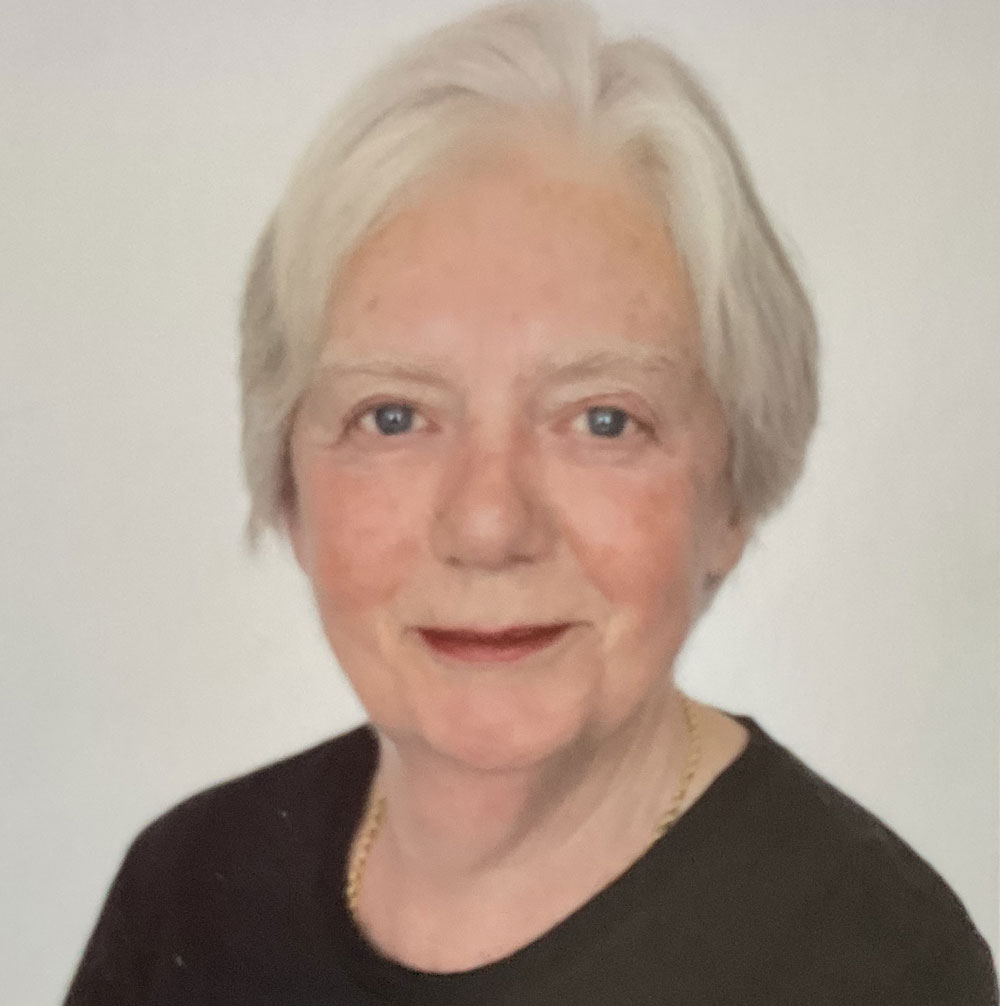
Corin Fairburn Bass, 2024. Photograph supplied.

Aunty’s Nieces and Nephews

The founder of Aunty’s Nieces and Nephews in Melbourne was Meg Paul, a school librarian and parent, who was active in local politics. She was also a member of the Children’s Television Action Committee, a group who campaigned for better programmes for children.

In 1976, she was alarmed by news of cuts to the ABC and wrote to Melbourne’s Herald newspaper. Her letter, under the headline ‘Let’s defend the ABC’, argued against cuts to the ABC and for its independence. She suggested forming a group to lobby for the ABC – and enough people contacted her to do just that. They met in her kitchen and started a newsletter.

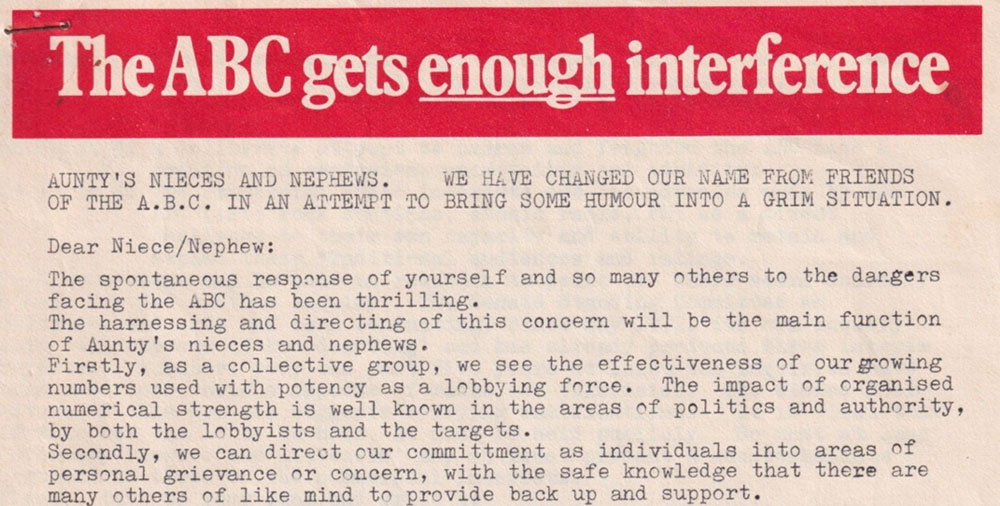
Aunty’s Nieces and Nephew’s newsletter. ABC Friends Archives.

Meg wrote letters to newspapers, contacted politicians during election campaigns and organised public meetings.

Meg Paul speaking at an Aunty’s Nieces and Nephews rally at Dallas Brookes Hall, 7 December 1978. Photographer John Ellis, University of Melbourne Archives.

In 1980, Meg Paul was invited to speak at a conference at the Australian National University in Canberra about the group she had founded:

Aunty’s Nieces and Nephews are credited by historian Ken Inglis with persuading Liberal backbenchers in late 1976 to block a move to abolish the ABC’s staff-elected Commissioner. The group’s newsletters were distributed to supporters in Victoria and interstate until 1985 when the committee was dissolved and its membership list sent to Friends of the ABC in Sydney.

Meg Paul spoke in 2023 about the activities the group undertook, admitting how much they had enjoyed it:

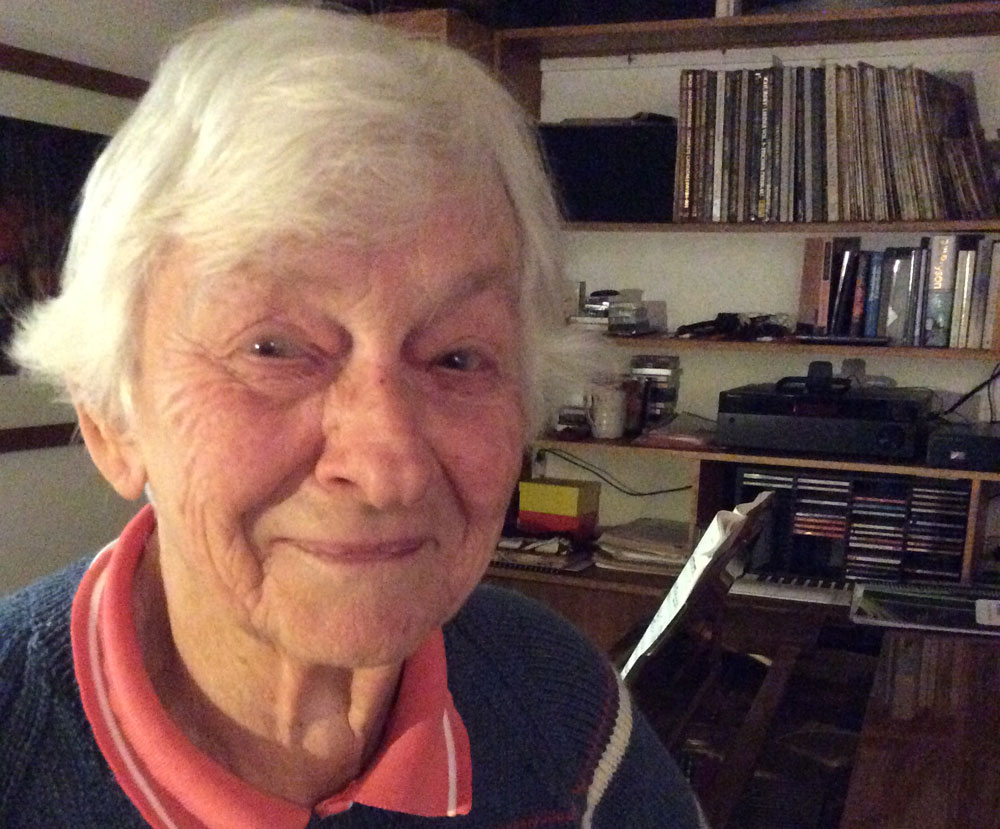
Meg Paul, 2025. Photograph supplied.

Aunty’s Nieces and Nephews Rally, Melbourne 1976

This Day Tonight, 24 November 1976, Australian Broadcasting Corporation Library Sales.

ABC Staff Association

The ABC Staff Association and ABC Friends groups were generally on common ground in the face of threats to the number of staff at the ABC. After the Fraser government announced cuts to the ABC’s funding in February 1976, the Acting Chair, Dr Earle Hackett estimated more than a thousand staff would be retrenched. The Staff Association called meetings to discuss its response, including the possibility of industrial action. Press coverage of the Staff Association’s deliberations was one factor that alerted the public to the need to stand up for the ABC.

In 1978, the ABC Staff association in NSW held stop work meetings and organised industrial action which resulted in black outs for radio and tv over several days. The Sydney Friends of the ABC placed an advertisement in The Sydney Morning Herald commending the sacrifice made by staff in losing pay and called on the public to support them.

Advertisement by Friends of the ABC featured The Sydney Morning Herald, 25 November 1978.

Tom Molomby was vice president of the NSW Staff Association at this time. He remembers becoming aware of the group called Friends of the ABC and welcoming its independence.

While the Staff Association welcomed the support of the Friends of the ABC, Molomby is adamant that the organisations determined strategies separately.

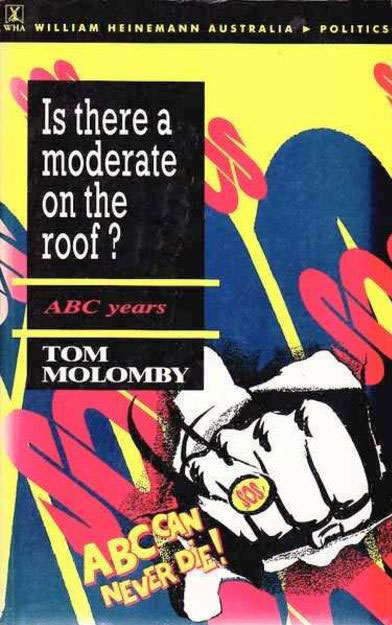
Tom Molomby was the staff-elected director from 1983–1988. He left the ABC in 1988 and wrote about his time in his book Is there a moderate on the roof? published in 1991.

Tom Molomby’s Is there a moderator on the roof? published in 1991. Jennifer Bowen collection.

Geoffrey Dutton

In July 1982, the Canberra Times published an interview with Geoffrey Dutton who had just become the first national spokesperson for the Friends of the ABC. Dutton was a well-known poet, author, academic and broadcaster,  yet it’s not fully clear how he came to be appointed to the role (possibly through his friendship with the poet Judith Rodriguez who was later the president of the Victorian Friends of the ABC).

Geoffrey Dutton, 1992. Photography by Bob Miller, National Library Australia, PIC NL36975/3 frame 8 LOC NL36975/3.

Dutton told the Canberra Times of his enthusiasm for the ABC following the government’s decision to throw out the Dix review proposal for corporate sponsorship. He was optimistic the charter would lead to a more ‘hopeful spirit throughout the ABC’ whose staff had been ‘mucked around over the years’.

Dutton does not appear to have been overly visible in his new role, but his appointment indicates a long-standing interest in having a unified Friends of the ABC nationally – the idea appears in a resolution passed in 1978 at a Sydney meeting. After national conferences began in the 1990s, South Australian Joan Laing launched the newsletter Background Briefing as a national publication in 1999. Professor Alan Knight was named national spokesperson of the Friends of the ABC at the national conference in May 2007.

Alan Knight News & Views (Vic), May 2007, p. 2.

Friends of the ABC initiated moves towards more formal unification in 2014, resulting in ABC Friends National in 2016.

Reflection: Using the media

A key objective for the founders of Friends of the ABC and Aunty’s Nieces and Nephews was becoming visible – to potential supporters, to politicians, and to the larger public. In the mid-1970s, the press was a means to achieve this. Notices of meetings were placed in the columns of classified advertising, letters were written to editors, and ABC Friends leaders became adept with quotable comments when editorial interest turned towards them.

Newspaper ads were occasionally used to attract supporters in the twenty-first century. The advertisements presented the reason for the groups’ existence. They also conveyed the message that members of the public could do something about it – ads for meetings defined a space for action.

On occasion, the Friends of the ABC branches placed large advertisements in broadsheet papers. These declared and explained their position in relation to specific attacks on the ABC. The ads often had the look of petitions with lists of supporters that included prominent individuals in amongst everyday members of the groups. These ads implied that ‘the ABC is common cause for anyone and all’. This style of presentation returned in 2018, for a full page in the Australian Book Review.

Letters to the editor from Friends’ representatives appeared with some regularity for many years. Meg Paul and Walter Bass provided letters with bite, likely to interest readers, and were rewarded with headlines – or even on occasion, cartoons.

Letters to newspapers continued to set an agenda for discussion. One of the tasks for Friends’ volunteers in the 1990s was to monitor letters published in newspapers for supporters of the ABC not already known to them and make contact with them. 

There was a considerable amount of editorial press attention in the first years of the groups’ existence. This may have been due in part to the novelty of their existence, coupled with a view of the ABC audience as staid rather than stroppy. The participation of well-known ABC faces, as well as prominent public figures, at events organised by Friends of the ABC and Aunty’s Nieces and Nephews helped to secure attention.

The groups’ activities were also covered on occasion by the ABC itself, with live radio interviews prior to major rallies and television reports afterwards. But over the years, not every such event was reported either by the ABC or the relevant newspapers. Despite the steady production by ABC Friends of submissions to government inquiries, with associated media releases, media attention was generally confined to big events, featuring big names, such as the rallies in Sydney in 2001 and 2018.

The early members of Friends of the ABC and Aunty’s Nieces and Nephews used the media of the day adeptly, contributing to the groups acquiring the recognition they needed to secure a future. ABC Friends continues to use the media available to it to create a visible public presence and affirm the right to advocate for an independent and well-funded ABC.

Andrews, Kylie Trailblazing Women of Australian Public Broadcasting, 1945–1975, Anthem Press, London, 2022.

Bandler, Hans ‘Mass Communication for the Younger Generation’, Quockerwodgers: Mass Media Control, Australian Mass Communications Council, Sydney, 1973, pp. 35–37.

Berg, Chris and Sinclair Davidson, Against Public Broadcasting, Connor Court, 2018.

Bongiorno, Frank Dreamers and Schemers: A Political History of Australia, La Trobe University Press, Melbourne, 2022.

Dempster, Quentin, Death Struggle, Allen & Unwin, 2000.

Inglis, K.S., This is the ABC: The Australian Broadcasting Commission, 1932–1983, 2nd ed, Black Inc., Melbourne, 2006.

Inglis, K.S., Whose ABC? The Australian Broadcasting Commission, 1983–2006, Black Inc., Melbourne, 2006.

Ganter, Sarah Anne,Christian Herzog and Viola Candice Milton, ‘Public Service Broadcasting-Friends groups as a microcosm of public interest media advocacy’, Humanities & Social Science Communications, vol. 7, no. 68, 2020.

Griffen-Foley, Bridget ‘Chronically Concerned’: The Australian Broadcasting Commission and its Advisory Committees’, Media History, Vol. 31, No. 3, 2025, pp. 279–310.

Harding, Richard Outside Interference: The Politics of Australian Broadcasting, Sun Books, Melbourne, 1979.

Holmes, Jonathan, On Aunty, Hachette Australia, 2019.

Iveson, Kurt, ‘Building a City For “The People”: The Politics of Alliance-Building in the Sydney Green Ban Movement’, Antipode, vol. 46, no. 4, 2014.

Molomby, Tom, Is There a Moderate on the Roof?: ABC Years, W. Heinemann Australia, Port Melbourne, 1991.

Lawrence, Mark, ‘How ABC acquired an abundance of nieces and nephews’, The Age, Green Guide,23 November 1978, p. 2.

Napoli, Philip M., ‘Public Interest Media Advocacy and Activism as a Social Movement’, Annals of the International Communication Association, vol. 33, no. 1, 2009, pp. 385–429.

Newspapers: The Age, The Sydney Morning Herald, Canberra Times

National Archives of Australia

Paul, Meg, ‘Public Pressure Groups in Broadcasting’, in Brendan O’Dwyer (ed.), Broadcasting in Australia: Today’s Issues and the Future. Proceedings of the National Conference held in July 1980, Centre for Continuing Education, Australian National University, Canberra, 1980, pp. 137–43.

Ricketson, Matthew & Patrick Mullins, Who needs the ABC, Scribe, 2022.

Stephens, Tony, ‘Bandler, Ida Lessing Faith (1918–2015)’, Obituaries Australia, National Centre of Biography, Australian National University, https://oa.anu.edu.au/obituary/bandler-ida-lessing-faith-15982/text30791, accessed 16 January 2026.

Stephens, Tony ‘Bandler, Hans (1914–2009)’, Obituaries Australia, National Centre of Biography, Australian National University, https://oa.anu.edu.au/obituary/bandler-hans-19329/text30793, accessed 16 January 2026.

August 1996: rallying season

Rallies have traditionally given the public a chance to declare their support for a cause: a slew of rallies took place in August 1996 to let ABC supporters do precisely that.

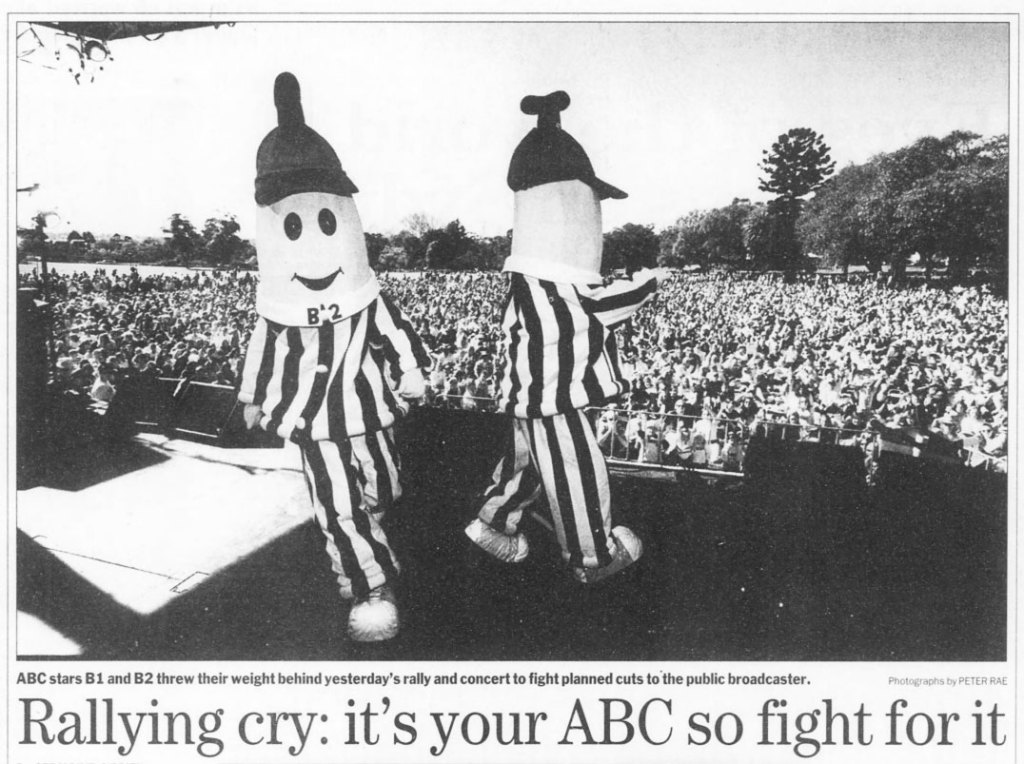
The first, at The Domain in Sydney on 4 August, was organised by ABC staff – journalists Maxine McHugh and Quentin Dempster shared the stage with Jemima from Play School and the Bananas in Pyjamas, before Christine Anu, Roy and H.G. and the Sydney Symphony Orchestra among others entertained an estimated crowd of 60,000.

A stall run by NSW Friends of the ABC enabled 4,000 letters to be written by members of the public to politicians. Among the many speakers was magistrate Pat O’Shane, who took issue with Bob Mansfield saying he did not want the inquiry he was then chairing into the ABC to become ‘emotional’. Pat O’Shane’s response was to declare ‘we are entitled to be emotional about the things we care about and if he can’t stand our emotional heat, he should get out of the kitchen cabinet.’

ABC rally at The Domain, Sydney, The Sydney Morning Herald, 5 August 1996, p. 3.

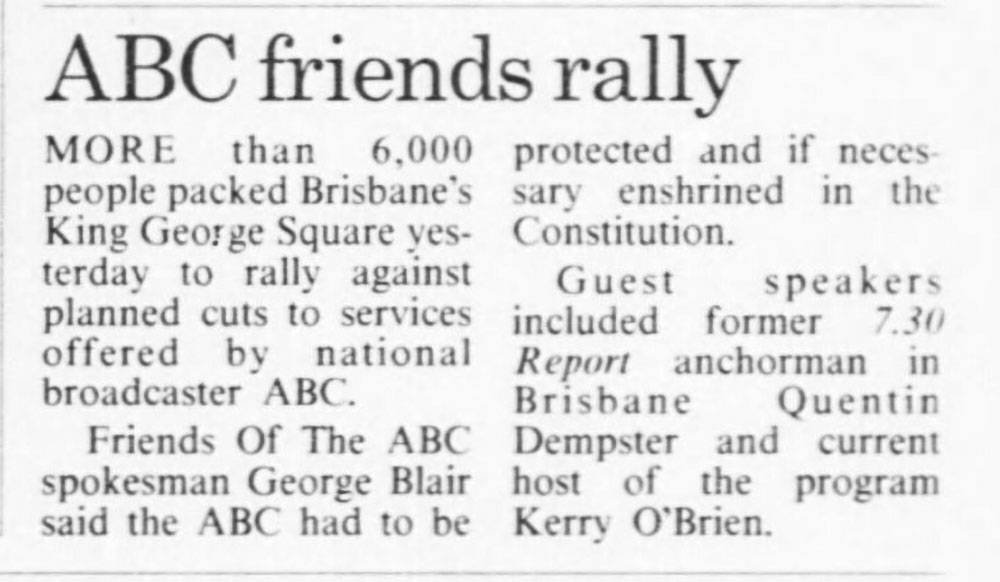
Rallies continued across Australia. Friends of the ABC in Queensland spokesman George Blair spoke at an event in Brisbane on 10 August calling for ‘protection’ of the ABC.

The Herald Sun, 11 August 1996, p. 14.

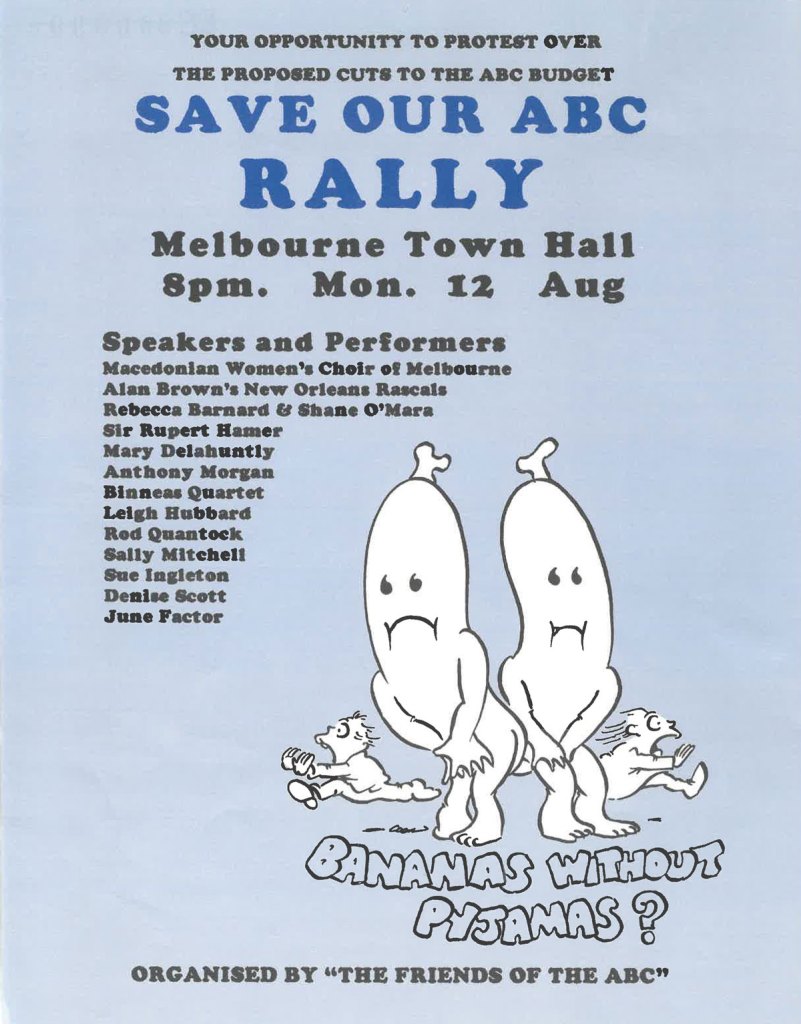
While in Melbourne, the City Council provided the Melbourne Town Hall for a rally and concert on 12 August organised by Friends of the ABC.

Flyer promoting the rally. ABC Friends Archives.

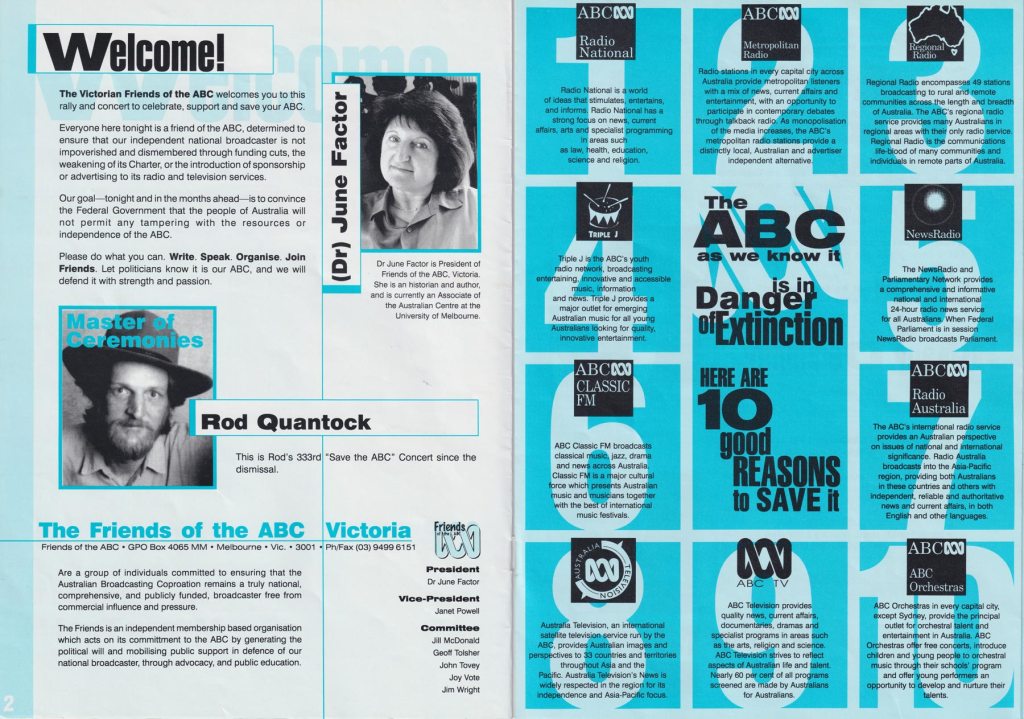
June Factor’s committee produced a stylish program for the occasion. It was almost a manifesto, with statements affirming the value of the ABC from groups such as the Council on the Ageing Victoria and the Victorian Council for Civil Liberties, as well as listing ’10 good reasons’ to save the ABC.

Save Our ABC rally program, 12 August 1996. ABC Friends Archives.

Glenys Stradijot, then a Friends of the ABC Victoria volunteer and later employed as campaign director, remembers the part the ABC itself played in the Melbourne rally.

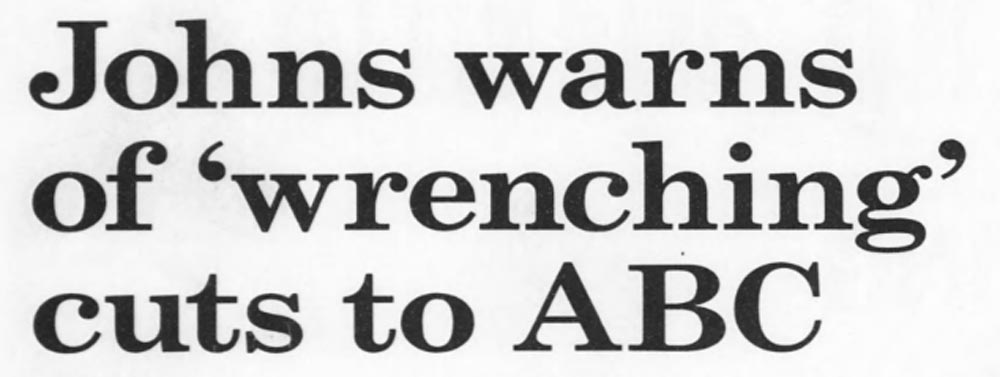
In September, ABC Managing Director Brian Johns addressed a Friends of the ABC rally in Adelaide, describing the proposed cuts as ‘not a pruning exercise, but wrenching’ in their impact. He made a point of referring to ‘the public outcry’ shown by the rallies.

The Sydney Morning Herald, 9 September 1996, p. 2.
Loading Comments...